Buy your weekday smoothies and get your weekend ones for free. (7 for the price of 5!)
At ForageU, we often return to a simple truth: many chronic modern ailments are conditions of irritation, dryness, and barrier breakdown rather than true deficiency or infection. Marshmallow root (Althaea officinalis) stands as one of the most important plants for understanding this principle.
This is not an herb that forces change. It restores conditions—the internal terrain—so the body can heal itself as it was designed to do.
Botanical Overview
- Latin name: Althaea officinalis
- Family: Malvaceae (mallow family)
- Parts used: Primarily the root (also leaves and flowers, to a lesser extent)
- Native range: Europe, Western Asia, North Africa
- Taste & energetics: Sweet, moistening, cooling
The name Althaea comes from the Greek althainein, meaning “to heal.” This is not symbolic—it reflects centuries of direct clinical use.
Historical Use Across Cultures
Ancient Medicine
Egyptians prepared marshmallow root with honey for throat and digestive ailments. Greek physicians, including Hippocrates and Dioscorides, prescribed it for wounds, coughs, and gastrointestinal irritation. In addition, Romans documented its use both as food and medicine, recognizing its protective effect on tissues.
Medieval & Traditional European Herbalism (c. 800–1600 AD)
During the early Middle Ages through the Renaissance, marshmallow root became firmly established as a cornerstone plant of European herbal medicine, particularly within monastery and physic gardens. Monastic communities served as the primary medical institutions of the time, preserving Greco-Roman medical knowledge while cultivating living materia medica in enclosed gardens.
Marshmallow (Althaea officinalis) was especially valued because it addressed a core medical concern of the era: chronic inflammation and tissue injury—conditions common in a world without antibiotics, modern sanitation, or pain management.
Marshmallow root earned its place as a foundational herb because it worked predictably and safely, even without precise dosing. Its mucilage-rich nature created immediate, observable effects—coating tissues, reducing pain, and easing irritation—making it highly valued in an era reliant on experiential evidence.
Herbalists of the time understood, intuitively if not biochemically, that:
Healing requires protection before regeneration.
This principle guided marshmallow’s continued use well into the Renaissance, where it remained a primary recommendation for inflammatory and ulcerative conditions across Europe.
Marshmallow root became a staple of monastery gardens, used for:
- Inflammation of the lungs and throat
- Digestive ulcerations
- Urinary tract irritation
- External wounds and burns
It was considered a foundational soothing herb, especially when inflammation or dryness was present.
The medieval understanding of marshmallow root closely mirrors modern scientific findings on mucosal barrier protection and anti-inflammatory polysaccharides. What monks observed through centuries of practice—reduced pain, faster recovery, and improved tolerance—has since been validated through pharmacological research.
Understanding Marshmallow Root’s Primary Mechanism
The Role of Mucilage
Marshmallow root is exceptionally rich in mucilage, a class of water-soluble polysaccharides that swell into a gel-like substance when soaked.
This mucilage does not act systemically in the bloodstream. Instead, it works locally and physically:
- It coats mucous membranes
- Forms a protective biofilm
- Reduces mechanical and chemical irritation
- Allows damaged tissue time and space to regenerate
This is critical to understand: Marshmallow root does not suppress symptoms—it restores barrier integrity.
Systems Supported & Why It Works
1. Digestive System Support
Modern digestion is constantly assaulted by:
- Highly acidic foods
- Alcohol and caffeine
- NSAIDs
- Ultra-processed foods
- Chronic stress
Marshmallow root helps by:
- Coating the esophagus and stomach lining, reducing acid irritation
- Supporting healing of gastric and intestinal mucosa
- Reducing nerve irritation associated with reflux and “burning” sensations
- Supporting gut lining integrity in conditions like IBS or leaky gut patterns
Importantly, marshmallow root does not suppress stomach acid. Instead, it protects tissues from damage while digestion continues normally.
2. Respiratory & Throat Support
Dry, irritated respiratory tissues are common in:
- Winter air
- Heated indoor environments
- Vocal strain
- Smoke or environmental exposure
Marshmallow root:
- Coats the throat and upper airway
- Reduces cough reflex triggered by irritation
- Supports epithelial repair in the lungs
- Helps with dry, unproductive coughs
This makes it especially useful when inflammation is present without excess mucus.
3. Nervous System & Inflammation Cross-Talk
Inflamed tissues send constant danger signals to the nervous system. By reducing irritation at the tissue level, marshmallow root indirectly supports:
- Reduced stress signaling from the gut-brain axis
- Calmer vagal nerve tone
- Improved parasympathetic (rest-and-digest) activity
This is one reason marshmallow root pairs so well with matcha, ginger, and nourishing foods—it grounds stimulation.
4. Urinary & Skin Support
Marshmallow root has long been used to:
- Soothe bladder and urinary tract irritation
- Support epithelial healing
- Calm inflammatory skin conditions when used topically
Again, it is not antimicrobial—it is protective and restorative.
Why Preparation Method Matters (Cold Infusion vs Heat)
Mucilage is heat sensitive.
- Boiling water degrades mucilage
- Cold or room-temperature extraction preserves it
- The slippery texture is a sign of correct preparation
This is why marshmallow root works best as:
- Cold infusion
- Gentle warming afterward (never boiling)
The Forage Daily Marshmallow Nourishing Drink
This formulation reflects traditional herbal logic and modern physiological understanding.
Why This Combination Works
- Marshmallow root: coats, protects, hydrates tissues
- Matcha: antioxidants, gentle mental clarity
- Ginger: circulation, digestive warmth, prevents stagnation
- Beet root powder: liver support, nitric oxide production, blood flow
- Honey: antimicrobial, soothing, synergistic with mucilage
This balances cooling + warming, soothing + stimulating, protective + nourishing.
Recipe: Marshmallow Root Matcha Nourishing Drink
Ingredients
- 1–2 tsp dried marshmallow root (cut & sifted)
- 12–16 oz filtered water
- 1 tsp matcha powder
- ½ tsp beet root powder
- ¼–½ tsp fresh grated ginger (or ¼ tsp dried)
- 1–2 tsp raw honey (to taste)
Instructions
- Add marshmallow root to cool or room-temperature water.
- Cover and steep 4–8 hours or overnight.
- Strain.
- Gently warm (do not boil).
- Whisk in matcha and beet powder.
- Add ginger and honey.
- Stir or lightly froth.
Best taken: Morning or mid-day, especially during dryness, stress, or digestive irritation.
Safety & Contraindications
Marshmallow root is:
- Very safe for long-term use
- Suitable for children and elders
- Non-stimulating and non-habit forming
Important note:
Because it coats tissues, it may slow absorption of medications. Take medications 1–2 hours apart.
Marshmallow root reminds us that healing often comes not from force, but from restoration of boundaries. When tissues are protected, the body remembers how to repair itself.
This is the heart of creation-based medicine—and a perfect example of what it means to heal with the body, not against it.
Continue the Support: Healing Breath
Marshmallow root teaches us that when tissues are irritated or worn thin, protection must come before repair. This principle is especially true for the lungs and throat—areas constantly exposed to dry air, cold weather, environmental irritants, and stress.
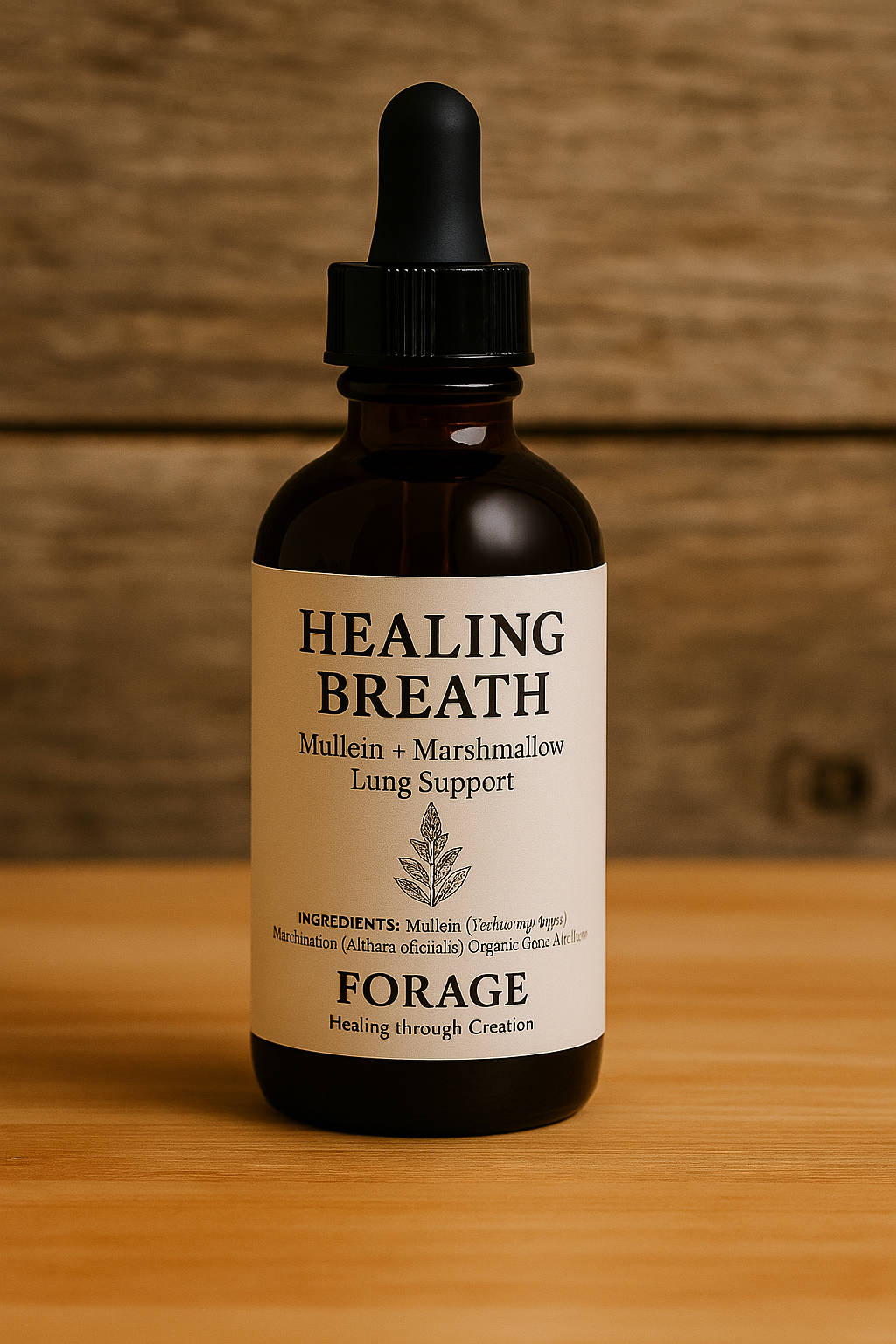
Healing Breath was formulated with this exact need in mind.
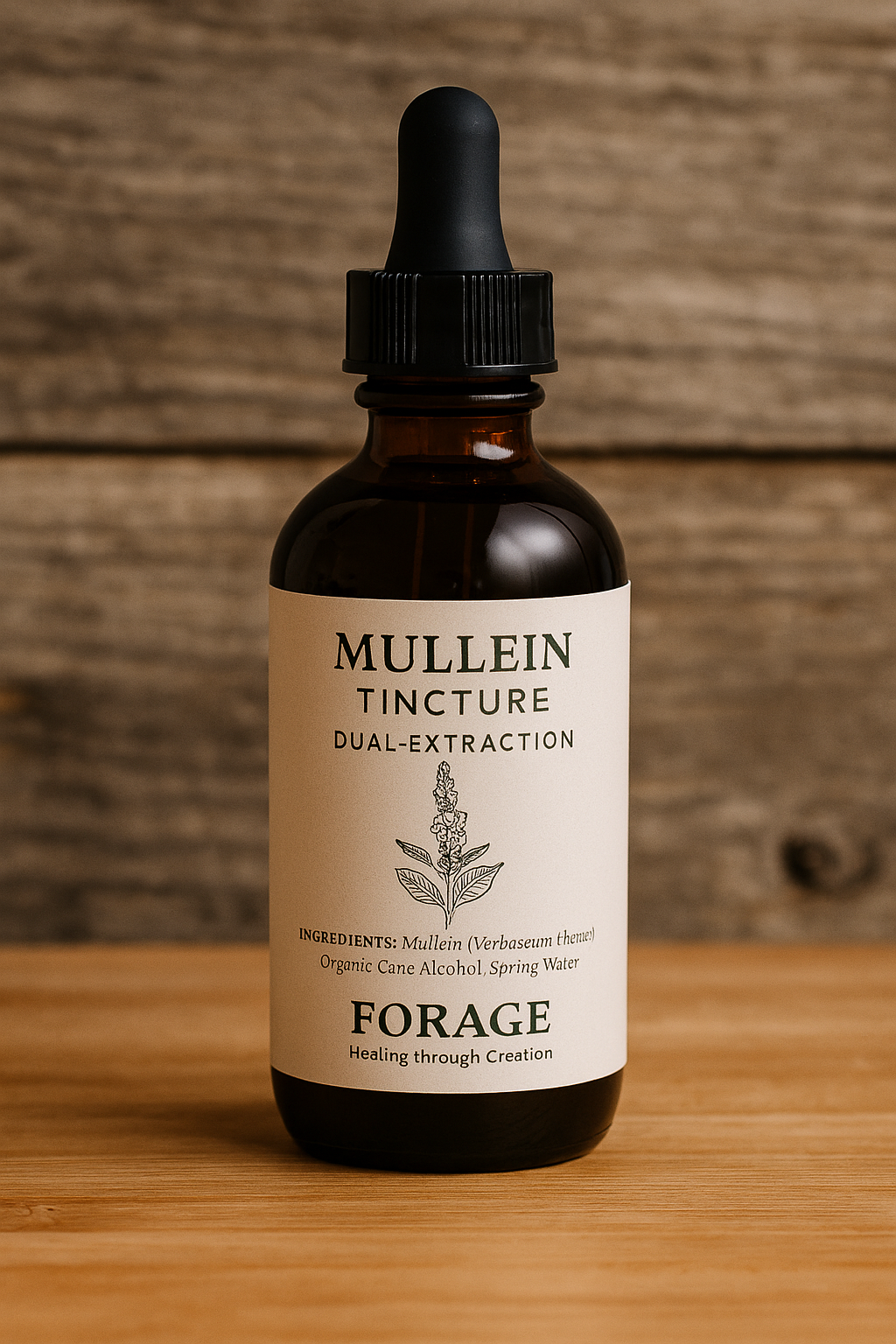
Built around traditional respiratory herbs like mullein and supported by complementary botanicals, Healing Breath works to:
- Soothe irritated lung and throat tissues
- Support gentle mucus clearance without over-drying
- Calm inflammation from cold air, seasonal stress, or environmental exposure
When paired with marshmallow root—whether as a cold infusion or daily nourishing drink—Healing Breath offers layered respiratory support:
marshmallow to protect and coat, mullein to restore and clear.
👉 Explore Healing Breath →
foragehealing.org/products/healing-breath-tincture-respiratory-relief-lung-support
References & Studies
Official Regulatory & Monograph Sources
European Medicines Agency monograph on marshmallow root (overview of traditional use & safety):
https://www.ema.europa.eu/en/medicines/herbal/althaeae-radix
EMA Summary for the Public — traditional uses of marshmallow root for irritation of the mouth, throat, and gut:
https://www.ema.europa.eu/en/documents/herbal-summary/marshmallow-root-summary-public_en.pdf
EMA Final Assessment Report (PDF) — detailed evaluation including traditional use basis:
https://www.ema.europa.eu/en/documents/herbal-report/final-assessment-report-althaea-officinalis-l-radix_en.pdf
Published Research on Mechanisms & Effects
Protective mucosal properties of marshmallow root extracts — demonstrating film-forming/soothing effects on mucosa (experimental study):
https://www.escop.com/new-study-supports-mucosal-protective-properties-marshmallow/
Marshmallow root extract for treatment of irritative cough — consumer-reported symptom reduction and tolerability:
https://pubmed.ncbi.nlm.nih.gov/30064132/
Anti-inflammatory & protective properties overview (recent pharmacological review, 2025):
https://www.pharmacypractice.org/index.php/pp/article/view/3153
Additional Research Profiles
Narrative review of traditional & modern use (includes cough, gastric inflammation, and ethnobotanical context):
https://japer.in/storage/models/article/f5TqIxFdtRizpWUR7QJcIhbRLMXjYU2hTii7woeWds9ikCBkEPOjkXbppPnI/althaea-officinalis-in-traditional-medicine-and-modern-phytotherapy.pdf
Scientific overview of mucilage and demulcent activity in Althaea officinalis (ESCOP/monograph summary):
https://www.escop.com/downloads/althaea-radix-marshmallow-root/